Campus culture
needs a curriculum.
Campus culture
needs a curriculum.
Campus culture
needs a curriculum.
We build courses that help universities
teach consent, boundaries, and conduct.
We build courses that help universities
teach consent, boundaries, and conduct.
We build courses that help universities
teach consent, boundaries, and conduct.
"I used to think if someone eventually says yes, it counts. Now I understand that repeated asking after a no is itself a form of coercion"
"I used to think if someone eventually says yes, it counts. Now I understand that repeated asking after a no is itself a form of coercion"
"A friend was vulnerable enough to share that he was facing a hard battle with depression. If I had been told such a thing before I did this course I would have laughed it off. But instead I offered a helping hand."
"A friend was vulnerable enough to share that he was facing a hard battle with depression. If I had been told such a thing before I did this course I would have laughed it off. But instead I offered a helping hand."
"The role of victim blaming. I used to think if someone is dressed more provocatively, their chances of harassment would be higher. But that's not the point."
"The role of victim blaming. I used to think if someone is dressed more provocatively, their chances of harassment would be higher. But that's not the point."
"I was offered alcohol. I almost gave into peer pressure but I had completed that module one or two days ago and so I knew what to do. Everyone besides me was drinking but I didn't. I felt powerful there."
"I was offered alcohol. I almost gave into peer pressure but I had completed that module one or two days ago and so I knew what to do. Everyone besides me was drinking but I didn't. I felt powerful there."
"The course made me rethink the assumption that sexual harassment only involves physical contact. I now understand it also includes verbal remarks, digital interactions, and creating a hostile environment."
"The course made me rethink the assumption that sexual harassment only involves physical contact. I now understand it also includes verbal remarks, digital interactions, and creating a hostile environment."
Problem Statement
Problem Statement
Problem Statement
Responsible behaviour is expected, not taught. That gap defines culture, safety, and accountability in campuses and beyond.
Responsible behaviour is expected, not taught. That gap defines culture, safety, and accountability in campuses and beyond.
Designed for real context. Built to work with your system.
Designed for real context. Built to work with your system.
Designed for real context.
Built to work with your system.
A modular, structured course on consent, boundaries, and behaviour that integrates seamlessly into your academic environment.
A modular, structured course on consent, boundaries, and behaviour that integrates seamlessly into your academic environment.
Modular and easy to implement - pick any module you need.
Select and combine modules based on your institution’s needs, and deploy them seamlessly within your existing systems as credited courses or outside your curriculum.
Modular and easy to implement - pick any module you need.
Select and combine modules based on your institution’s needs, and deploy them seamlessly within your existing systems as credited courses or outside your curriculum.
Created for completion and retention - designed to not be skipped.
Evidence-based pedagogy designed for retention and engagement. Our interactive, activity and scenario-based learning replaces passive formats to drive real participation.
Created for completion and retention - designed to not be skipped.
Evidence-based pedagogy designed for retention and engagement. Our interactive, activity and scenario-based learning replaces passive formats to drive real participation.
Built for real context
Grounded in situations and decisions college students actually face and need to learn to deal with to be stronger, empathetic adults. Makes learning relatable, practical, and easier to apply in real life.
Built for real context
Grounded in situations and decisions college students actually face and need to learn to deal with to be stronger, empathetic adults. Makes learning relatable, practical, and easier to apply in real life.
Multi-disciplinary learning design approach
Created by psychologists, educators, designers, and the audience. We ensure the content is credible, relevant, engaging, and constantly updated.
Multi-disciplinary learning design approach
Created by psychologists, educators, designers, and the audience. We ensure the content is credible, relevant, engaging, and constantly updated.
Interactive learning designed for engagement
Interactive learning designed for engagement
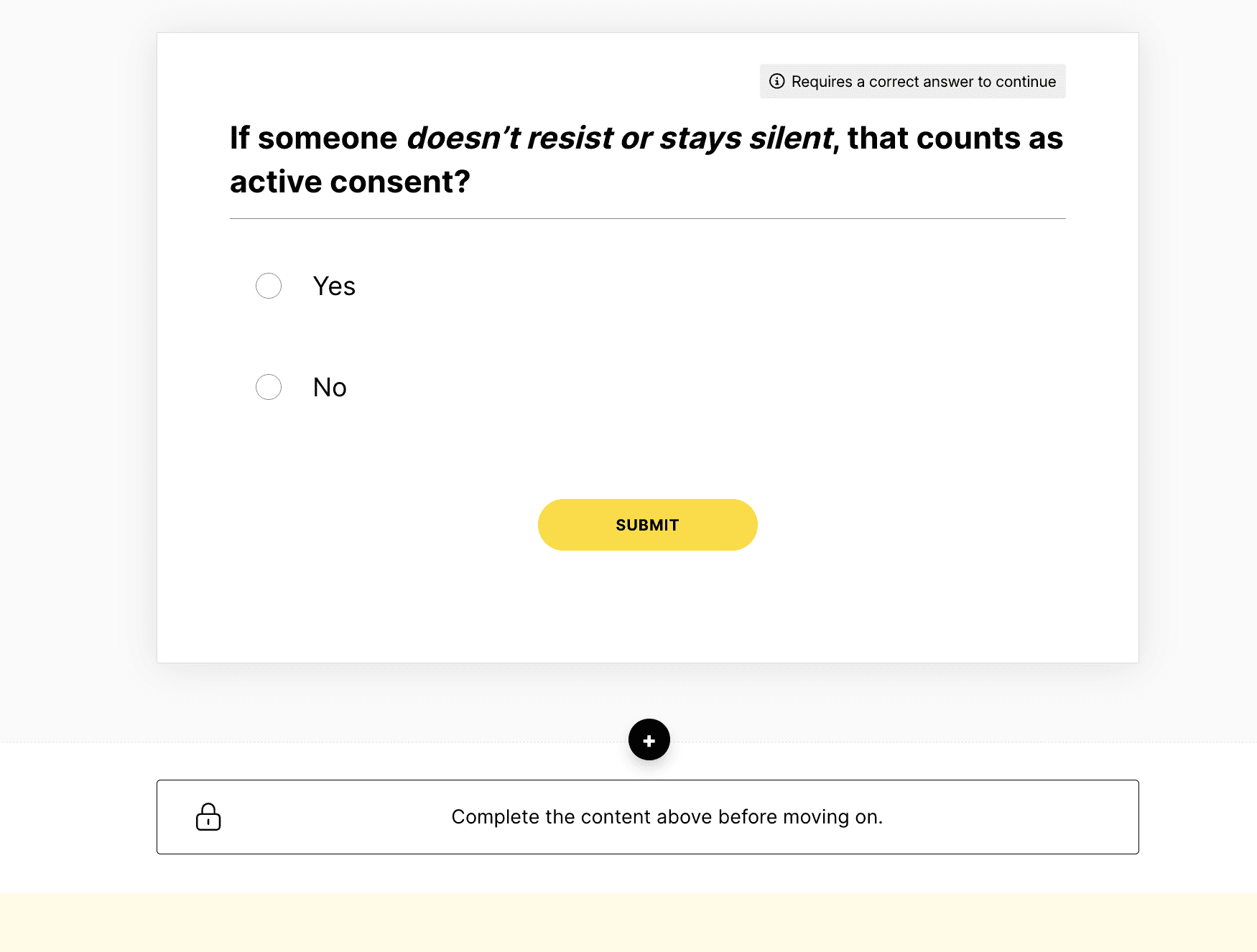
Designed to be completed
Interactive scenarios and decision points require active participation, making it difficult to skip and easier to stay engaged.
Moves beyond fear and compliance
Focuses on understanding impact, empathy, and responsibility, not just rules or consequences.
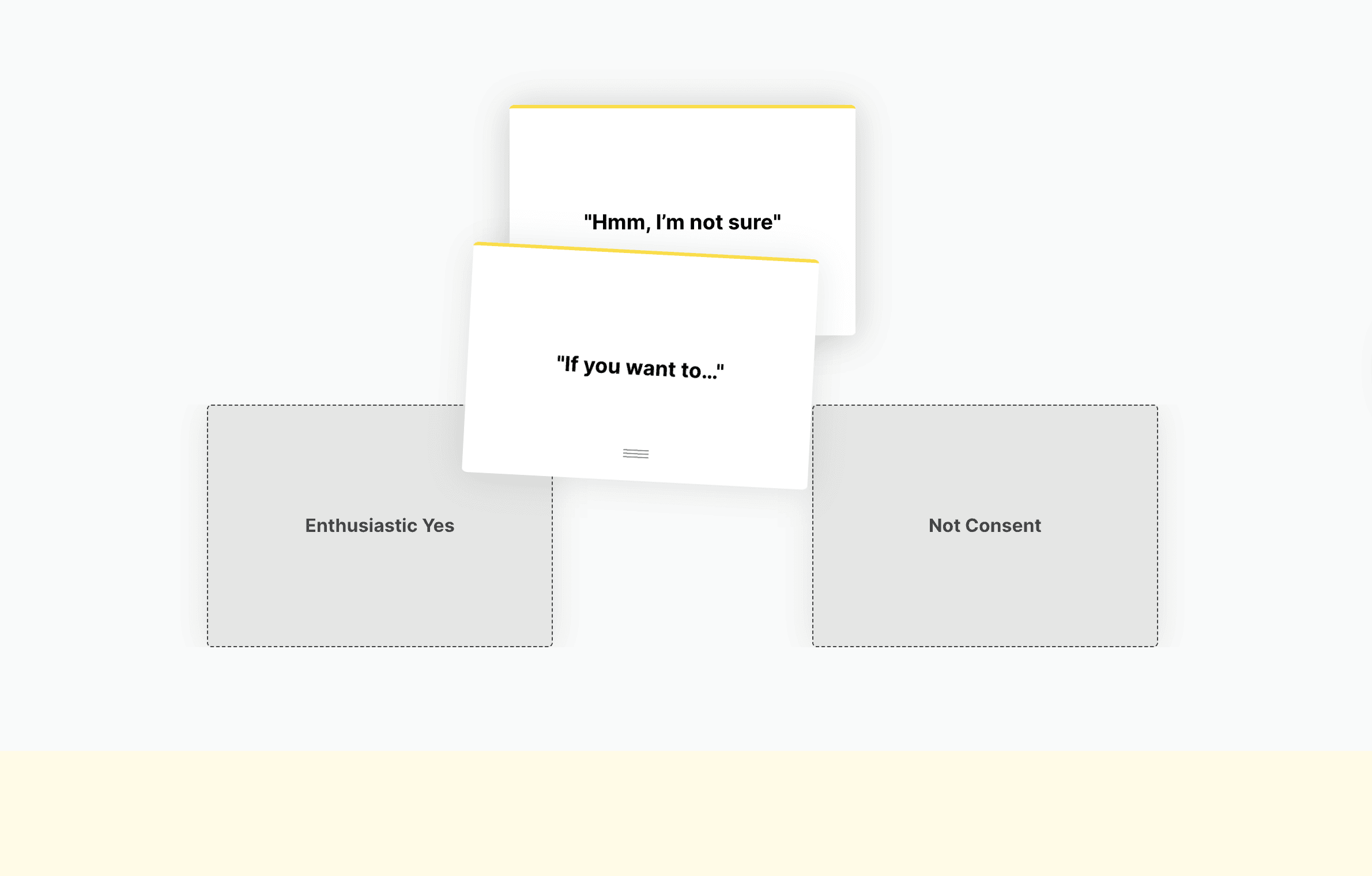
Multiple formats, not just text
Combines video, scenarios, prompts, and reflection to keep the experience engaging and varied.
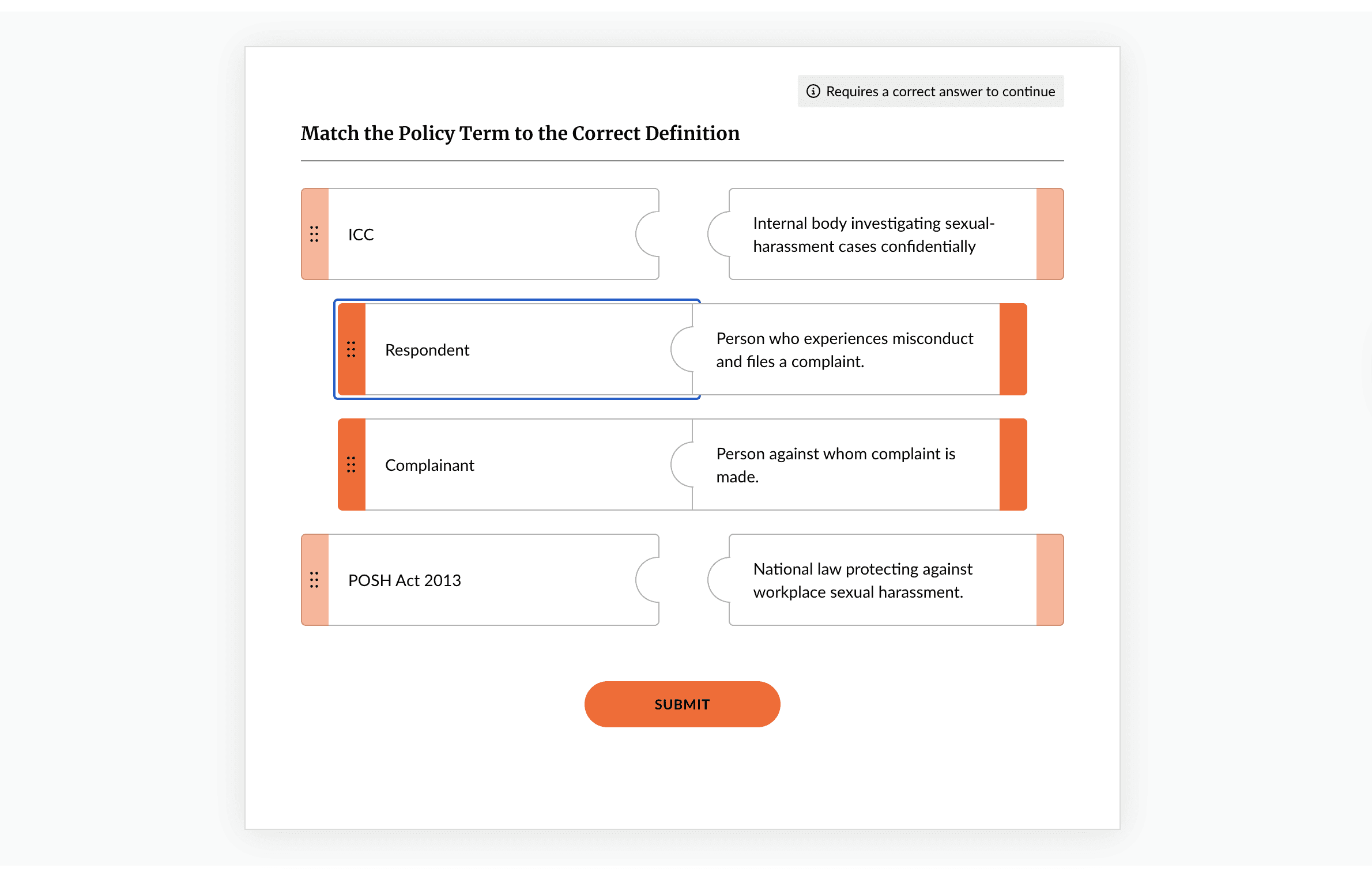
Grounded in real situations
Learners navigate situations they are likely to encounter, making the content practical and relatable.
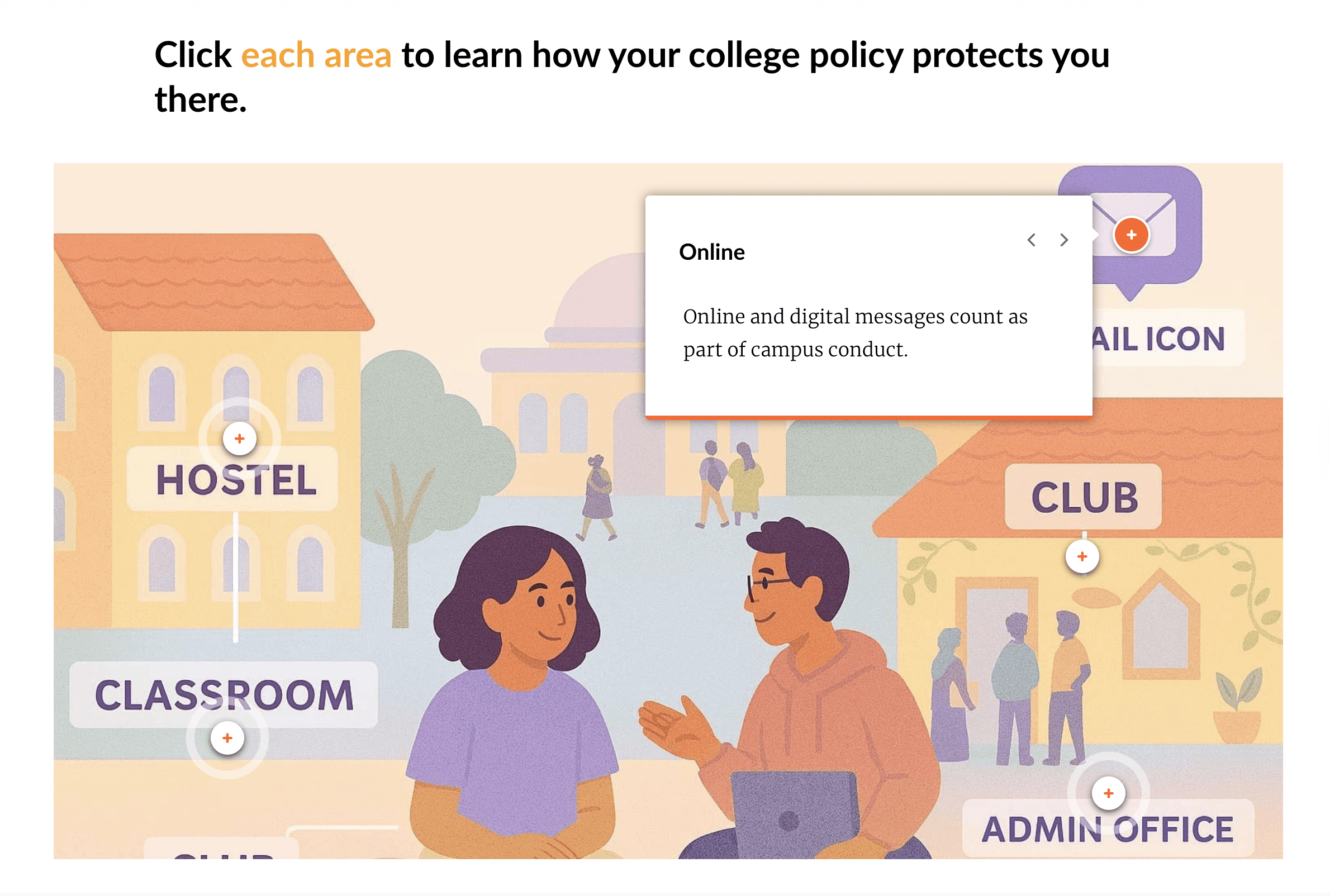
Designed to be completed
Interactive scenarios and decision points require active participation, making it difficult to skip and easier to stay engaged.
Moves beyond fear and compliance
Focuses on understanding impact, empathy, and responsibility, not just rules or consequences.
Multiple formats, not just text
Combines video, scenarios, prompts, and reflection to keep the experience engaging and varied.
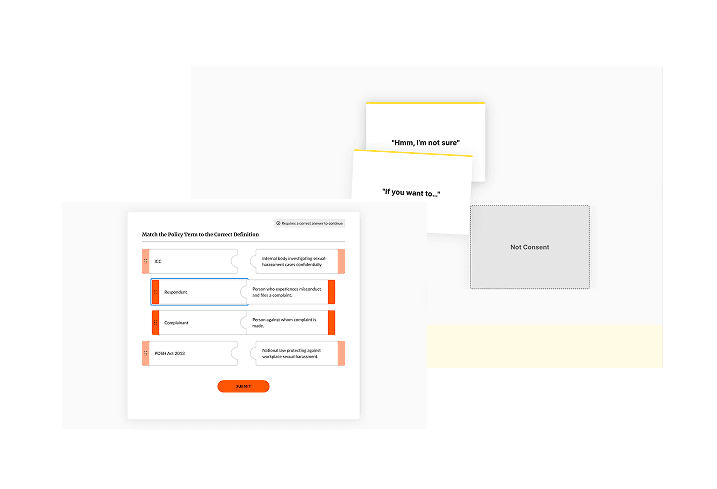
Grounded in real situations
Learners navigate situations they are likely to encounter, making the content practical and relatable.
Designed to be completed
Interactive scenarios and decision points require active participation, making it difficult to skip and easier to stay engaged.
Moves beyond fear and compliance
Focuses on understanding impact, empathy, and responsibility, not just rules or consequences.
Multiple formats, not just text
Combines video, scenarios, prompts, and reflection to keep the experience engaging and varied.
Grounded in real situations
Learners navigate situations they are likely to encounter, making the content practical and relatable.
Curriculum Topics
Curriculum Topics
We cover the essential pillars of campus living through carefully designed modules.
We cover the essential pillars of campus living through carefully designed modules.
Emotional & Social Intelligence
Builds self-awareness, empathy, and emotional expression to support well-being and interactions on campus. Covers stress, transitions, conflict resolution, and healthy behavioural practices.
Emotional & Social Intelligence
Builds self-awareness, empathy, and emotional expression to support well-being and interactions on campus. Covers stress, transitions, conflict resolution, and healthy behavioural practices.
Relationships & Identity
Supports understanding of relationships, identity, and social dynamics that shape interactions on campus. Covers peer and family dynamics, gender and sexuality, and setting boundaries.
Relationships & Identity
Supports understanding of relationships, identity, and social dynamics that shape interactions on campus. Covers peer and family dynamics, gender and sexuality, and setting boundaries.
Sexual Misconduct, Consent, Recognition of Harm, and Promotion of Safety
Builds understanding of consent, misconduct, and harm across social, physical, and digital contexts. Covers power dynamics, coercion, survivor support, bystander intervention, and creating a safer campus environment.
Sexual Misconduct, Consent, Recognition of Harm, and Promotion of Safety
Builds understanding of consent, misconduct, and harm across social, physical, and digital contexts. Covers power dynamics, coercion, survivor support, bystander intervention, and creating a safer campus environment.
Laws and Campus Policies, and Their Application in Practice
Builds understanding of institutional policies, legal frameworks, and protections related to conduct and safety. Covers reporting mechanisms, accountability structures, consequences of misconduct, and roles in maintaining a safe campus environment.
Laws and Campus Policies, and Their Application in Practice
Builds understanding of institutional policies, legal frameworks, and protections related to conduct and safety. Covers reporting mechanisms, accountability structures, consequences of misconduct, and roles in maintaining a safe campus environment.
Substance Abuse
Builds awareness of substance use, its risks, and the social and psychological factors that influence it. Covers early warning signs, peer pressure, prevention, and pathways for support, recovery, and responsible decision-making.
Substance Abuse
Builds awareness of substance use, its risks, and the social and psychological factors that influence it. Covers early warning signs, peer pressure, prevention, and pathways for support, recovery, and responsible decision-making.
What Our Learners are Saying
What Our Learners are Saying
This course made me think about boundaries in a much broader way than I ever had before. I realized that consent is not just about extreme situations but also about everyday interactions and emotional pressure.
I can now identify verbal manipulation into giving consent.
I was genuinely wanting to know this. All I heard/read before this module was that one must take consent regularly. But after this module, I learned the answer of a very critical question in my mind i.e. HOW to take consent from the other person.
The example on the lack of expression among boys is powerful. Because I have experienced it myself and I'm happy people are understanding that boys too should express emotions. Bottling it up only causes mental problems.
I learned how grooming and sextortion often follow predictable stages starting with trust building and gradually escalating into manipulation and blackmail.
It made me aware of the aftermaths of being an assault victim, what emotional and social pressures they have to go through, how difficult it becomes to fight both the system and that terrible memory at the same time.
There are legal provisions for men as well and sexual assault on males is more common than I thought.
I learnt the ways to identify subtle victim blaming and the different options available to report assault.
The Distract method like simply asking a random question or 'accidentally' spilling a drink is a game changer. It makes being an active bystander feel much more doable for the average person.
How we talk about addiction really matters. Shifting from blame to understanding it as a complex condition makes it easier to support people in a way that actually helps them recover.
The module helped me understand the difference between low risk experimentation and a progression pattern in substance use, and made me aware of how media can influence perceptions.
I learnt a lot and am really happy I now have the knowledge to be an active helper rather than a passive bystander. I've always felt insecure about not being enough to people in trouble, but seeing the little things I can do helps a lot.
I learnt about the menstrual cycle and how it affects women. I was not taught this well enough in school.
I realized pronouns matter since addressing someone by their correct and preferred pronouns is equivalent to giving them respect.
One stereotype I’ve questioned is the idea that men are naturally better at technical or mechanical things, while women are better at caring or creative roles. I’ve realized that these abilities don’t depend on gender. They depend on interest, practice, and opportunity. It made me see how limiting these assumptions can be, both for men and women.
Gender and sexuality have more depth than I thought, I learned how to be a better ally, I’m still reflecting on it.
We should not make ourselves feel bad for saying no and that consent once given before can be withdrawn at any time. Our decisions must be respected.
I used to think harassment is only sexual. Now I understand it also includes verbal remarks, digital interactions, and creating a hostile environment.
I learned about the dangers of sexual exploitation and stalking, how these things usually unfold and why.
Anything less than a clear yes is a no. It is always mandatory to ask for consent no matter what.
I stopped to think that hormones don't actually make anyone aggressive, it's just that society perceives it so, which was something I found out today.
It helped me understand how our brain changes due to traumatic experiences and that what I was feeling is not abnormal
Trauma affects the brain as well as the body, not just emotions. The brain's fire alarm system can stay switched on after trauma, making a person feel constantly unsafe even in normal situations. These reactions are not a weakness but a biological response.
Knowing the neuroscience behind trauma helps people respond with empathy instead of judgment. It reduces victim blaming and encourages patience and support.
I was offered to drink. I almost gave into peer pressure but I had completed that module 1-2 days ago. Everyone besides me was drinking but I didn't. I felt powerful there.
The course has made me believe that being a little bit nicer to oneself and not beating yourself up to match unrealistic standards is the way to go. That change in mentality will definitely make me look forward to life.
If it's a joke, it's not a problem. This course changed that for me. Our intentions don't matter. How they took it, that matters.
I will not shy away from helping someone when I feel they need it. Earlier I never knew how to handle these situations but now I am well equipped with the tools to help others feel seen and heard and therefore be a better friend, brother and a son.
This course made me think about boundaries in a much broader way than I ever had before. I realized that consent is not just about extreme situations but also about everyday interactions and emotional pressure.
I was genuinely wanting to know this. All I heard/read before this module was that one must take consent regularly. But after this module, I learned the answer of a very critical question in my mind i.e. HOW to take consent from the other person.
I can now identify verbal manipulation into giving consent.
The example on the lack of expression among boys is powerful. Because I have experienced it myself and I'm happy people are understanding that boys too should express emotions. Bottling it up only causes mental problems.
We should not make ourselves feel bad for saying no and that consent once given before can be withdrawn at any time. Our decisions must be respected.
I learned about the dangers of sexual exploitation and stalking, how these things usually unfold and why.
I used to think harassment is only sexual. Now I understand it also includes verbal remarks, digital interactions, and creating a hostile environment.
Anything less than a clear yes is a no. It is always mandatory to ask for consent no matter what.
I learned how grooming and sextortion often follow predictable stages starting with trust building and gradually escalating into manipulation and blackmail.
There are legal provisions for men as well and sexual assault on males is more common than I thought.
It made me aware of the aftermaths of being an assault victim, what emotional and social pressures they have to go through, how difficult it becomes to fight both the system and that terrible memory at the same time.
I learnt the ways to identify subtle victim blaming and the different options available to report assault.
I stopped to think that hormones don't actually make anyone aggressive — it's just that society perceives it so, which was something I found out today.
Trauma affects the brain as well as the body, not just emotions. The brain's fire alarm system can stay switched on after trauma, making a person feel constantly unsafe even in normal situations. These reactions are not a weakness but a biological response.
It helped me understand how our brain changes due to traumatic experiences and that what I was feeling is not abnormal
Knowing the neuroscience behind trauma helps people respond with empathy instead of judgment. It reduces victim-blaming and encourages patience and support.
The Distract method like simply asking a random question or 'accidentally' spilling a drink is a game changer. It makes being an active bystander feel much more doable for the average person.
The module helped me understand the difference between low risk experimentation and a progression pattern in substance use, and made me aware of how media can influence perceptions.
How we talk about addiction really matters. Shifting from blame to understanding it as a complex condition makes it easier to support people in a way that actually helps them recover.
I learnt a lot and am really happy I now have the knowledge to be an active helper rather than a passive bystander. I've always felt insecure about not being enough to people in trouble, but seeing the little things I can do helps a lot.
I was offered to drink. I almost gave into peer pressure but I had completed that module 1-2 days ago. Everyone besides me was drinking but I didn't. I felt powerful there.
If it's a joke, it's not a problem. This course changed that for me. Our intentions don't matter. How they took it, that matters.
The course has made me believe that being a little bit nicer to oneself and not beating yourself up to match unrealistic standards is the way to go. That change in mentality will definitely make me look forward to life.
I will not shy away from helping someone when I feel they need it. Earlier I never knew how to handle these situations but now I am well equipped with the tools to help others feel seen and heard and therefore be a better friend, brother and a son.
I learnt about the menstrual cycle and how it affects women. I was not taught this well enough in school.
One stereotype I’ve questioned is the idea that men are naturally better at technical or mechanical things, while women are better at caring or creative roles. I’ve realized that these abilities don’t depend on gender. They depend on interest, practice, and opportunity. It made me see how limiting these assumptions can be, both for men and women.
I realized pronouns matter since addressing someone by their correct and preferred pronouns is equivalent to giving them respect.
Gender and sexuality have more depth than I thought, I learned how to be a better ally, I’m still reflecting on it
This course made me think about boundaries in a much broader way than I ever had before. I realized that consent is not just about extreme situations but also about everyday interactions and emotional pressure.
I was genuinely wanting to know this. All I heard/read before this module was that one must take consent regularly. But after this module, I learned the answer of a very critical question in my mind i.e. HOW to take consent from the other person.
I can now identify verbal manipulation into giving consent.
The example on the lack of expression among boys is powerful. Because I have experienced it myself and I'm happy people are understanding that boys too should express emotions. Bottling it up only causes mental problems.
We should not make ourselves feel bad for saying no and that consent once given before can be withdrawn at any time. Our decisions must be respected.
I learned about the dangers of sexual exploitation and stalking, how these things usually unfold and why.
I used to think harassment is only sexual. Now I understand it also includes verbal remarks, digital interactions, and creating a hostile environment.
Anything less than a clear yes is a no. It is always mandatory to ask for consent no matter what.
I learned how grooming and sextortion often follow predictable stages starting with trust building and gradually escalating into manipulation and blackmail.
There are legal provisions for men as well and sexual assault on males is more common than I thought.
It made me aware of the aftermaths of being an assault victim, what emotional and social pressures they have to go through, how difficult it becomes to fight both the system and that terrible memory at the same time.
I learnt the ways to identify subtle victim blaming and the different options available to report assault.
I stopped to think that hormones don't actually make anyone aggressive it's just that society perceives it so, which was something I found out today.
Trauma affects the brain as well as the body, not just emotions. The brain's fire alarm system can stay switched on after trauma, making a person feel constantly unsafe even in normal situations. These reactions are not a weakness but a biological response.
It helped me understand how our brain changes due to traumatic experiences and that what I was feeling is not abnormal
Knowing the neuroscience behind trauma helps people respond with empathy instead of judgment. It reduces victim blaming and encourages patience and support.
The Distract method like simply asking a random question or 'accidentally' spilling a drink is a game-changer. It makes being an active bystander feel much more doable for the average person.
The module helped me understand the difference between low risk experimentation and a progression pattern in substance use, and made me aware of how media can influence perceptions.
How we talk about addiction really matters shifting from blame to understanding it as a complex condition makes it easier to support people in a way that actually helps them recover.
I learnt a lot and am really happy I now have the knowledge to be an active helper rather than a passive bystander. I've always felt insecure about not being enough to people in trouble, but seeing the little things I can do helps a lot.
I was offered to drink. I almost gave into peer pressure but I had completed that module 1-2 days ago. Everyone besides me was drinking but I didn't. I felt powerful there.
If it's a joke, it's not a problem. This course changed that for me. Our intentions don't matter. How they took it, that matters.
The course has made me believe that being a little bit nicer to oneself and not beating yourself up to match unrealistic standards is the way to go. That change in mentality will definitely make me look forward to life.
I will not shy away from helping someone when I feel they need it. Earlier I never knew how to handle these situations but now I am well equipped with the tools to help others feel seen and heard and therefore be a better friend, brother and a son.
I learnt about the menstrual cycle and how it affects women. I was not taught this well enough in school.
One stereotype I’ve questioned is the idea that men are naturally better at technical or mechanical things, while women are better at caring or creative roles. I’ve realized that these abilities don’t depend on gender. They depend on interest, practice, and opportunity. It made me see how limiting these assumptions can be, both for men and women.
I realized pronouns matter since addressing someone by their correct and preferred pronouns is equivalent to giving them respect.
Gender and sexuality have more depth than I thought, I learned how to be a better ally, I’m still reflecting on it
This course made me think about boundaries in a much broader way than I ever had before. I realized that consent is not just about extreme situations but also about everyday interactions and emotional pressure.
I was genuinely wanting to know this. All I heard/read before this module was that one must take consent regularly. But after this module, I learned the answer of a very critical question in my mind i.e. HOW to take consent from the other person.
I can now identify verbal manipulation into giving consent.
The example on the lack of expression among boys is powerful. Because I have experienced it myself and I'm happy people are understanding that boys too should express emotions. Bottling it up only causes mental problems.
We should not make ourselves feel bad for saying no and that consent once given before can be withdrawn at any time. Our decisions must be respected.
I learned about the dangers of sexual exploitation and stalking, how these things usually unfold and why.
I used to think harassment is only sexual. Now I understand it also includes verbal remarks, digital interactions, and creating a hostile environment.
Anything less than a clear yes is a no. It is always mandatory to ask for consent no matter what.
I learned how grooming and sextortion often follow predictable stages starting with trust building and gradually escalating into manipulation and blackmail.
There are legal provisions for men as well and sexual assault on males is more common than I thought.
It made me aware of the aftermaths of being an assault victim, what emotional and social pressures they have to go through, how difficult it becomes to fight both the system and that terrible memory at the same time.
I learnt the ways to identify subtle victim blaming and the different options available to report assault.
I stopped to think that hormones don't actually make anyone aggressive it's just that society perceives it so, which was something I found out today.
Trauma affects the brain as well as the body, not just emotions. The brain's fire alarm system can stay switched on after trauma, making a person feel constantly unsafe even in normal situations. These reactions are not a weakness but a biological response.
It helped me understand how our brain changes due to traumatic experiences and that what I was feeling is not abnormal
Knowing the neuroscience behind trauma helps people respond with empathy instead of judgment. It reduces victim blaming and encourages patience and support.
The Distract method like simply asking a random question or 'accidentally' spilling a drink is a game-changer. It makes being an active bystander feel much more doable for the average person.
The module helped me understand the difference between low risk experimentation and a progression pattern in substance use, and made me aware of how media can influence perceptions.
How we talk about addiction really matters shifting from blame to understanding it as a complex condition makes it easier to support people in a way that actually helps them recover.
I learnt a lot and am really happy I now have the knowledge to be an active helper rather than a passive bystander. I've always felt insecure about not being enough to people in trouble, but seeing the little things I can do helps a lot.
I was offered to drink. I almost gave into peer pressure but I had completed that module 1-2 days ago. Everyone besides me was drinking but I didn't. I felt powerful there.
If it's a joke, it's not a problem. This course changed that for me. Our intentions don't matter. How they took it, that matters.
The course has made me believe that being a little bit nicer to oneself and not beating yourself up to match unrealistic standards is the way to go. That change in mentality will definitely make me look forward to life.
I will not shy away from helping someone when I feel they need it. Earlier I never knew how to handle these situations but now I am well equipped with the tools to help others feel seen and heard and therefore be a better friend, brother and a son.
I learnt about the menstrual cycle and how it affects women. I was not taught this well enough in school.
One stereotype I’ve questioned is the idea that men are naturally better at technical or mechanical things, while women are better at caring or creative roles. I’ve realized that these abilities don’t depend on gender. They depend on interest, practice, and opportunity. It made me see how limiting these assumptions can be, both for men and women.
I realized pronouns matter since addressing someone by their correct and preferred pronouns is equivalent to giving them respect.
Gender and sexuality have more depth than I thought, I learned how to be a better ally, I’m still reflecting on it
Built by educators, psychologists, learning designers.
Built by educators, psychologists, learning designers.
Built by educators, psychologists, learning designers.
Integrated into the academic system
at the BITS Campuses
Integrated into the academic system at the BITS Campuses
Integrated into the academic system at the BITS Campuses
4
4
campuses
campuses
4,200+
4,200+
learners engaged
learners engaged
4.7/5
4.7/5
average rating
average rating